Protecting Our Community: What Emergency Teams Are Seeing with E-Bikes and E-Scooters
- Posted On:

E-bikes and e-scooters are more popular than ever. ER providers are seeing worrying injury trends: severe injuries in young riders using these devices without proper safety gear or traffic knowledge. While e-bikes and e-scooters offer a fun, convenient way to get around, they can reach speeds up to 28 mph and weigh significantly more than standard bicycles; collisions involve much more force. Instead of minor scrapes, medical teams are treating high-impact injuries, including traumatic brain injuries, skull fractures, and spinal trauma. Higher speeds also reduce stopping time, increasing risk for pedestrians and motorists alike. Emergency departments are treating a concerning rise in severe injuries. Many riders are taking to the road without adequate riding experience, knowledge of traffic laws, or proper head protection.
Here are 3 essential steps to keep rides fun and safe:
- Gear Up for Speed: A basic bike helmet isn't always enough for higher-speed devices. Choose a helmet rated for e-bike speeds, ensure it sits low and flat on the forehead, and make sure the rider can comfortably touch the ground when stopped.
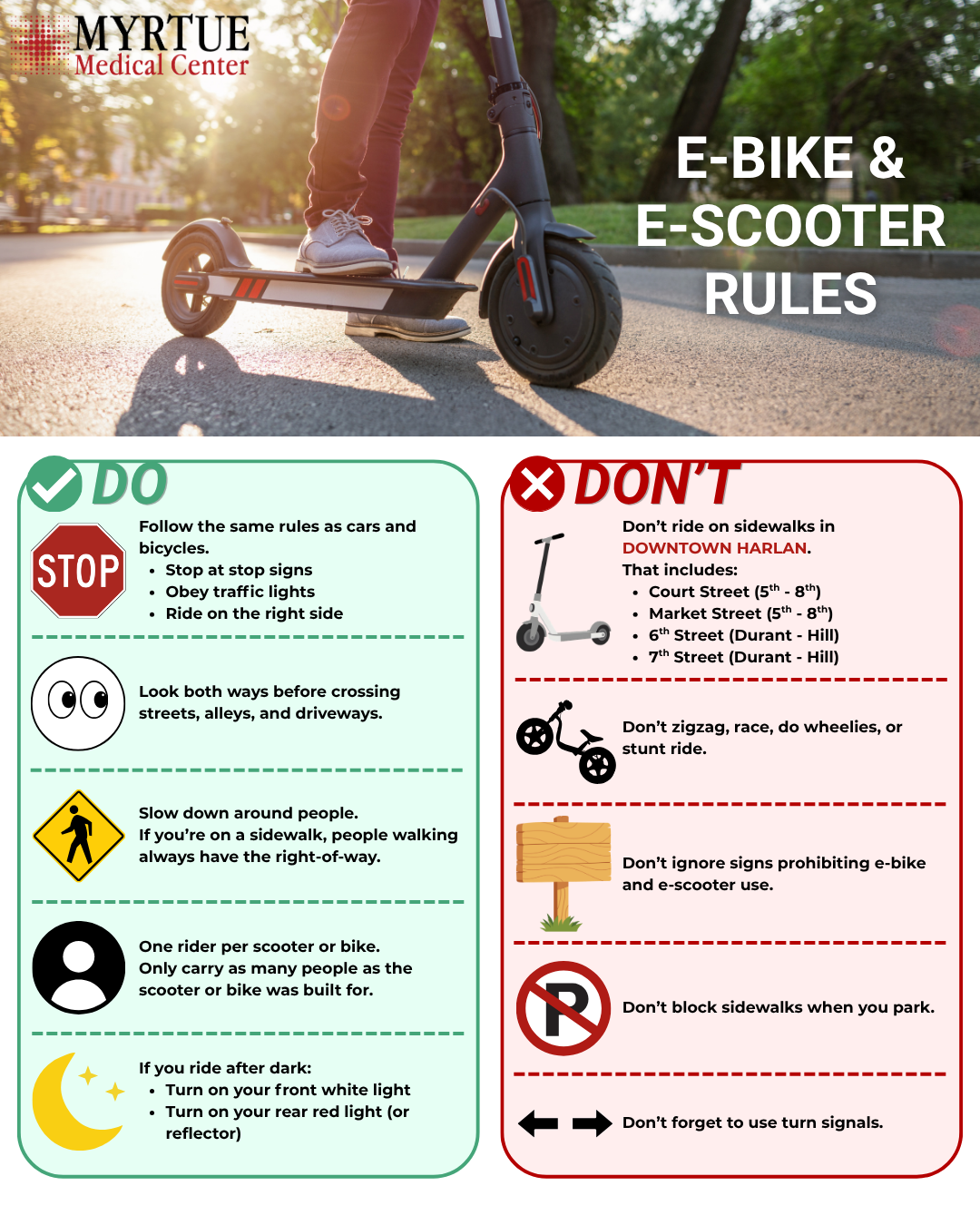
- Master Road Smarts: Make sure riders know basic traffic laws, hand signals, and sidewalk etiquette. Practice navigating intersections together before letting them ride solo.
- Be Seen: Fast-moving devices give drivers less time to stop. Wear shoes, bright or reflective gear and always assume drivers don't see you. E-scooter riders face higher rates of upper-extremity injuries. Wearing wrist guards, elbow pads, and knee pads helps absorb impacts.
Let's work together to keep everyone safe out there!